

Diwali in Goa 2025: More Than Lights—Narkasur, Dindi, and a Coastal Celebration
When you think of Diwali, you might picture rows of diyas and family gatherings. But in Goa, the festival of lights takes on a unique and vibrant character that you won’t find anywhere else in India. Here, Diwali is not just a one-day affair; it’s a multi-day spectacle that blends ancient traditions with a distinctly Goan flavor. If you’re planning a trip to Goa in early November, you’re in for a treat as the state comes alive with celebrations that are both deeply spiritual and incredibly festive.
The most iconic part of a Goan Diwali is the tradition of Narkasur Dahan. Weeks before the festival, you’ll see local youth groups and artists painstakingly crafting giant effigies of the demon Narkasur. These larger-than-life figures, often towering over buildings, are a sight to behold. On the eve of Diwali, known as Narak Chaturdashi, these effigies are paraded through the streets before being set ablaze at dawn, symbolizing the victory of good over evil, as Lord Krishna defeated the demon. This is a spectacle of art, competition, and community spirit that draws huge crowds and is a must-see experience.
 While the rest of India celebrates the return of Lord Rama to Ayodhya, Goa’s Diwali is centered around the legend of Lord Krishna’s victory over Narkasur. The morning after the Narkasur Dahan, Goans celebrate ‘Dhakti Diwali’ (small Diwali). A unique tradition is the crushing of a bitter fruit called ‘karith’ underfoot, symbolizing the destruction of the demon. This is followed by a breakfast of ‘fao’ or poha (flattened rice), prepared in various delicious ways.
Another unique celebration, especially in the city of Margao, is the Dindi Utsav. This festival, which has been granted state festival status, takes place on the second day after the main Diwali day. A grand procession carrying the idol of Lord Vithal Rakhumai from the Hari temple in Pajifond to the Vithal temple in Comba fills the streets. Devotees dance and sing bhajans and abhangs, creating an atmosphere of pure devotion. The streets are lined with fairs, and the commercial capital of Goa transforms into a hub of spiritual and cultural activity for the night.
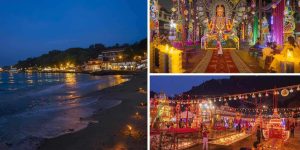
Of course, the more traditional aspects of Diwali are also celebrated with great enthusiasm. Homes are decorated with beautiful ‘akash kandils’ (sky lanterns) and intricate rangoli designs. Lakshmi Pujan is performed in homes and businesses, with families praying for prosperity. What makes it uniquely Goan is the setting. Imagine the prayers and chants mingling with the sound of the waves, or lighting diyas along the shoreline as fireworks light up the sky over the Arabian Sea.
The celebrations continue with Govardhan Puja and Bhai Dooj, the latter celebrating the bond between brothers and sisters. Families often spend this day exploring Goa’s natural beauty, from quiet cycling trails to picnics on secluded beaches, blending tradition with the relaxed Goan lifestyle.
Diwali in Goa, which typically falls in late October or early November, coincides with the beginning of the tourist season, offering pleasant weather for exploring. It’s a time when you can witness the state’s rich cultural heritage in full swing. From the fiery spectacle of Narkasur Dahan to the devotional fervor of the Dindi Utsav and the serene beauty of diyas by the sea, Diwali in Goa is an experience that engages all your senses. It’s a celebration that is both deeply rooted in tradition and yet has a modern, festive vibe that is quintessentially Goan.
